How Regulatory Shifts in European Gaming Markets Have Reshaped Live Dealer Roulette Payout Mechanics and Mobile App Integrations
Written by Dana Reed · Aug 24, 2026
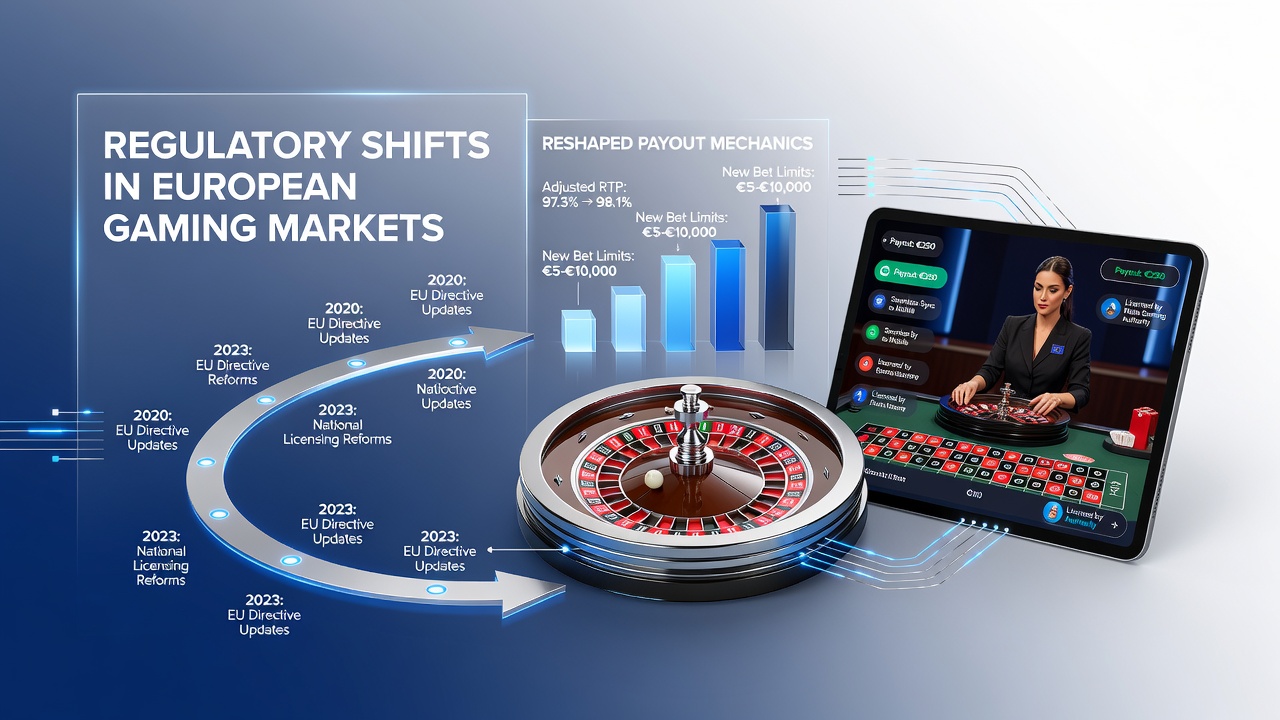
How Regulatory Shifts in European Gaming Markets Have Reshaped Live Dealer Roulette Payout Mechanics and Mobile App Integrations
European gaming regulators have introduced several updates since 2023 that directly influence how operators structure live dealer roulette payouts and integrate these games into mobile platforms, and by August 2026 those measures continue to drive measurable changes across the sector. Data from the European Commission shows that harmonized rules on transparency and consumer protection prompted operators to revise payout displays, while separate directives on digital services required tighter security protocols for app-based play.
Key Regulatory Developments Across Europe
Countries including the Netherlands, Germany, and Sweden each enacted or amended licensing frameworks that emphasize verifiable fairness in real-time games, and these policies converged on requirements for documented payout calculations that must appear within live dealer interfaces. Observers note that such rules emerged from broader efforts to align national laws with EU-wide consumer protection standards, which in turn affected how studios transmit roulette results to player devices. Research indicates that operators responded by embedding automated reporting tools into their systems so that payout percentages update dynamically based on regulatory thresholds rather than remaining fixed across sessions.
Adjustments to Live Dealer Roulette Payout Mechanics
Live dealer roulette platforms adapted their mechanics to comply with mandates for immediate visibility of return-to-player figures, and this often involved software modifications that calculate and display adjusted odds during each spin cycle. Experts have observed that certain markets now require operators to separate house-edge components from promotional bonuses in real time, which means payout tables on screen change when players activate specific features or switch between European and French roulette variants. Figures from industry reports reveal that these adjustments reduced discrepancies between advertised rates and actual outcomes, while also compelling studios to log every transaction for audit trails that regulators can access on demand.
One notable shift involves the handling of side bets common in live formats, where regulators in multiple jurisdictions now demand separate verification of payout ratios before any bet appears in the mobile or desktop interface. Those who've studied the implementations point out that this process integrates with existing random number generator certifications yet adds layers of human oversight during live broadcasts, ensuring that dealers and software align on every announced result.

Changes in Mobile App Integrations
Mobile applications that deliver live dealer roulette incorporated new geolocation and age-verification modules to meet updated digital service rules, and these additions influenced how payout data flows between the casino server and the player's device. According to a report published by researchers at the University of Amsterdam, app developers redesigned user interfaces so that payout histories remain accessible within two taps while still satisfying data minimization requirements under privacy regulations. This integration often pairs with real-time alerts that flag when a player's session approaches spending limits set by local authorities, thereby linking payout mechanics directly to responsible gaming controls.
Operators in several European markets have documented that mobile platforms now use encrypted channels to transmit live video feeds alongside payout ledgers, which prevents tampering and satisfies audit standards without delaying gameplay. What's interesting is that these technical requirements encouraged partnerships between game providers and app developers to create modular code that can receive jurisdiction-specific updates without requiring full app store resubmissions each time a regulator revises its guidelines.
Operational Impacts on Studios and Operators
Live casino studios adjusted their workflows to accommodate the new reporting cadence, and this meant training dealers on updated display protocols while backend teams refined algorithms that sync payout information across multiple regulatory zones simultaneously. Data shows that integration costs rose initially but stabilized once standardized APIs became available for sharing compliance data with both national authorities and platform hosts. Observers note that operators who maintained separate mobile and desktop payout engines faced higher maintenance burdens, whereas unified systems allowed smoother transitions when rules changed in one country but not another.
Conclusion
Regulatory developments in European gaming markets have produced concrete alterations to how live dealer roulette presents payouts and how those games function within mobile applications, and these effects continue to evolve as of August 2026. Evidence from multiple sources demonstrates that transparency mandates, combined with digital service requirements, drove technical and procedural updates that operators implemented across their platforms. The ongoing process illustrates how compliance frameworks shape both the visible elements of gameplay and the underlying infrastructure that supports mobile access.