Analyzing Synchronization Between Physical Wheel Manufacturing Tolerances and Digital RNG Calibration Standards in Niche Roulette Variants
Written by Freya Becker · Oct 5, 2026

Analyzing Synchronization Between Physical Wheel Manufacturing Tolerances and Digital RNG Calibration Standards in Niche Roulette Variants
Physical roulette wheels in niche variants demand exacting manufacturing tolerances that range from 0.01 millimeters in pocket depth uniformity to sub-degree balance specifications across the rotor assembly, while digital RNG calibration standards enforce statistical randomness thresholds measured in chi-square distributions and serial correlation coefficients that must align within defined confidence intervals. Observers note that synchronization occurs when wheel output sequences from controlled spins match RNG-generated distributions in frequency, variance, and sequence independence, a process that testing laboratories verify through side-by-side data sets collected over thousands of trials. Data from gaming equipment certification reports indicate that deviations beyond 0.05 millimeters in wheel frets or 0.1 percent in RNG period length can shift payout ratios in variants such as French single-zero or double-ball formats.
Manufacturing Tolerances in Physical Wheels
Wheel manufacturers apply CNC machining and laser alignment protocols to maintain rotor flatness within 0.02 millimeters and pocket wall angles at 90 degrees plus or minus 0.5 degrees, specifications that directly influence ball trajectory and dwell time before pocket settlement. Researchers at materials testing facilities have documented how aluminum alloy rotors with embedded tungsten counterweights achieve dynamic balance at 50 revolutions per minute, reducing vibrational harmonics that otherwise introduce measurable bias in landing probabilities. In October 2026, updated ISO 17025-accredited protocols for gaming equipment began requiring 3D laser scanning of every production wheel to log tolerance data for regulatory submission, creating traceable records that link each physical unit to its digital calibration counterpart.
Digital RNG Calibration Standards
RNG systems for niche roulette variants undergo continuous calibration against test suites that include the NIST Statistical Test Suite and Dieharder battery, with pass criteria set at p-values between 0.01 and 0.99 across 100 million generated outcomes. Calibration laboratories adjust entropy sources and post-processing algorithms so that the digital output mirrors expected physical distributions for zero pockets, red-black splits, and column bets specific to each variant. Figures from certification databases show that European testing houses completed over 240 RNG recalibrations in 2025 alone, with variance metrics required to stay within 0.5 percent of theoretical values derived from physical wheel geometry models.
Cross-Domain Synchronization Methods
Engineers achieve synchronization by feeding physical wheel spin data into RNG seeding routines and then validating both outputs against identical probability matrices for each niche variant, a step that includes mapping wheel deceleration curves to RNG cycle lengths. Take one certification project where technicians spun a calibrated French wheel 50,000 times while running a parallel RNG instance, then compared pocket hit frequencies using Kolmogorov-Smirnov tests that confirmed alignment when tolerance thresholds and calibration intervals matched. What's interesting is how embedded sensors in modern wheels transmit real-time balance data to central systems that adjust RNG parameters dynamically, ensuring that any detected physical drift triggers an immediate recalibration flag within the software layer.
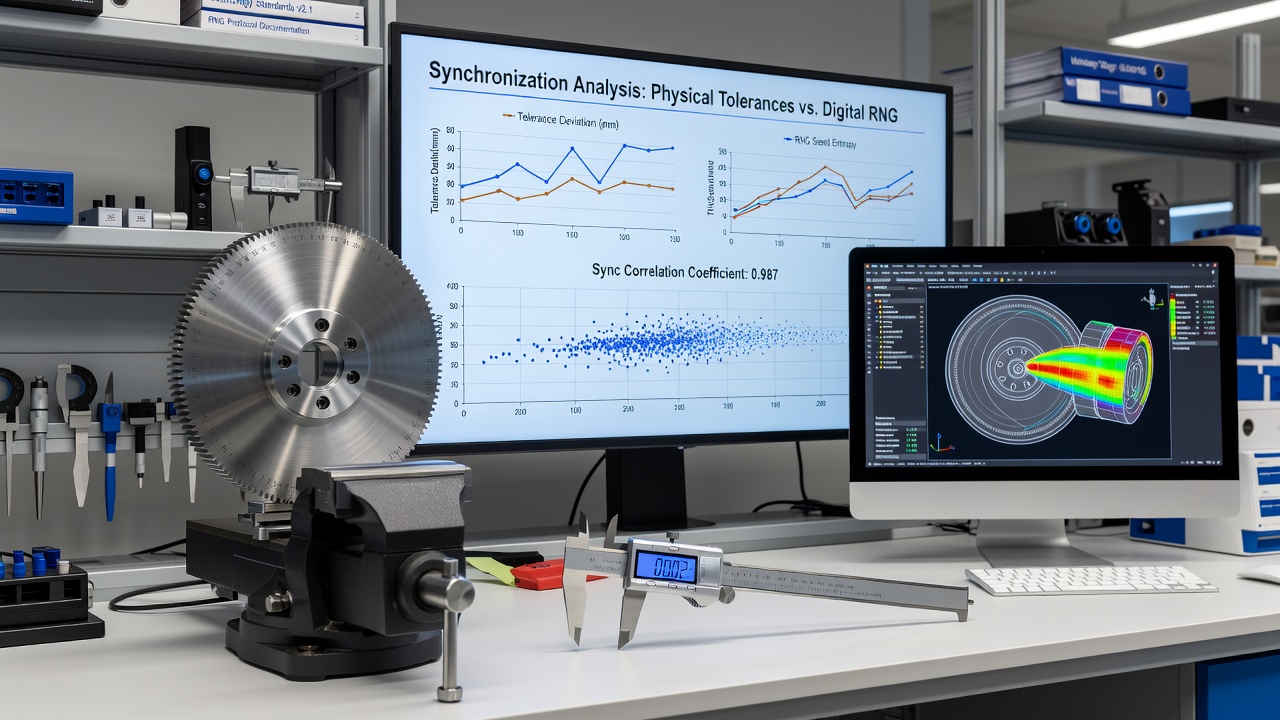
Regulatory frameworks from the Nevada Gaming Control Board and the Australian Communications and Media Authority now mandate joint physical-digital audits for hybrid roulette platforms, requiring operators to submit paired tolerance and calibration reports every six months. Those who've examined archived test logs find that synchronization failures most often trace to temperature-induced wheel expansion exceeding 0.03 millimeters or RNG clock drift beyond 50 nanoseconds per cycle, both of which shift outcome distributions outside acceptable bounds. Industry reports from the International Association of Gaming Regulators highlight that successful synchronization reduces variant-specific dispute rates by aligning mechanical and algorithmic fairness metrics into a single verifiable standard.
Variant-Specific Challenges
Niche variants introduce additional layers because double-zero American wheels carry different pocket counts and layouts than single-zero European models, forcing manufacturers to adjust tolerance bands while RNG calibrations must replicate the altered 38-pocket versus 37-pocket probabilities. Data indicates that multi-ball variants require RNG systems to generate correlated sequences that match the physical interaction probabilities between simultaneous balls, a calibration task verified through Monte Carlo simulations cross-checked against filmed wheel trials. Observers note that synchronization holds when the combined mechanical and digital variance stays below 1.2 percent across all betting positions in these specialized formats.
Conclusion
Continued refinement of manufacturing metrology and RNG testing protocols supports consistent synchronization across physical and digital roulette systems, with October 2026 marking expanded data-sharing requirements between wheel producers and software certifiers. Certification records and laboratory benchmarks demonstrate that precise tolerance control paired with rigorous statistical calibration maintains outcome integrity in niche variants while meeting oversight standards from multiple regulatory regions.